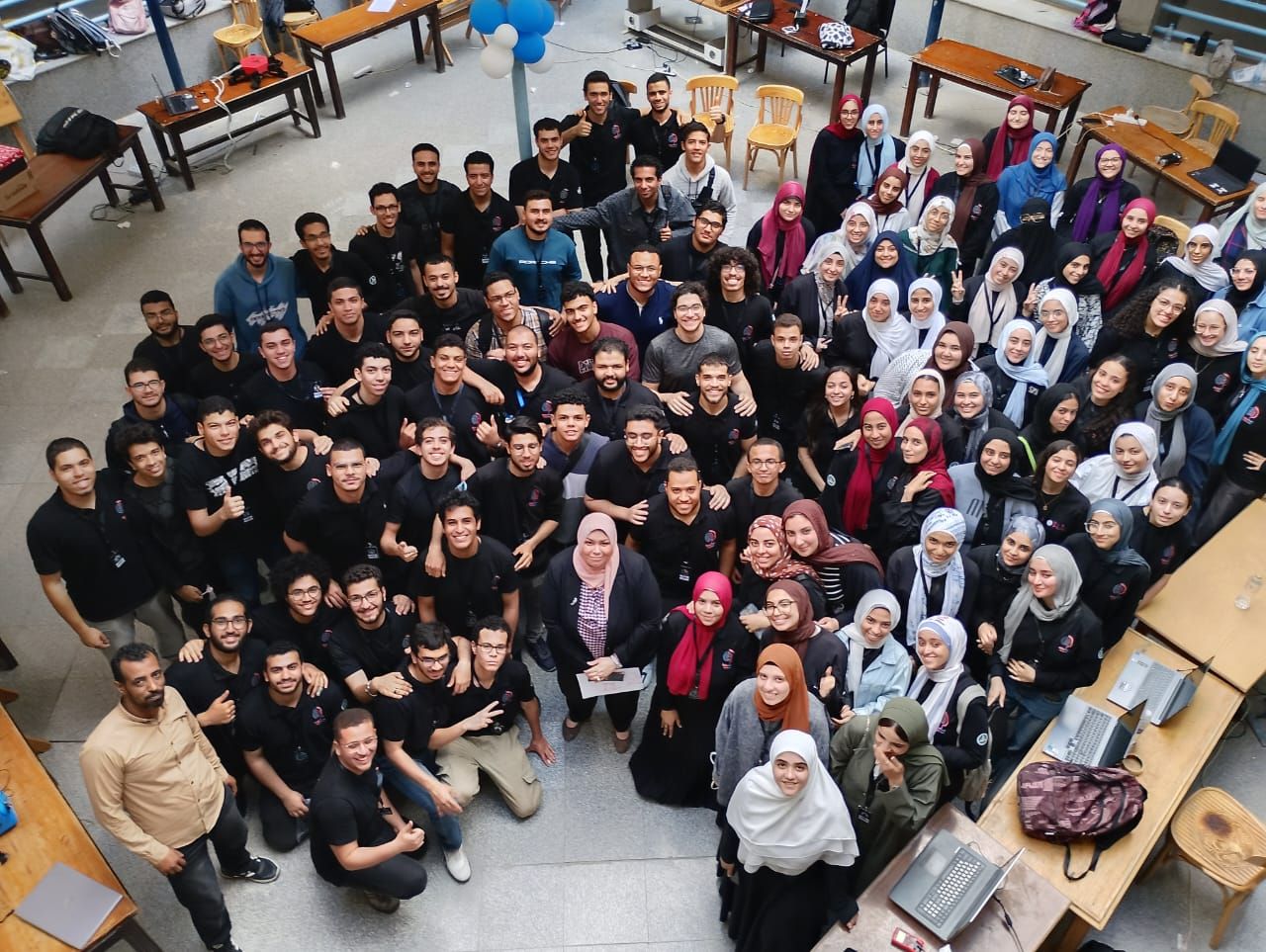
The RoboTech student organization hosted an exhibition showcasing innovative student projects as part of the faculty’s commitment to supporting student activities and encouraging innovation, creativity, and hands-on application in the fields of robotics, artificial intelligence, and smart technologies. The event was held under the patronage of Prof. Mohamed Diaa Zein El Abedeen, President of Ain Shams University; Prof. Rami Maher Ghali, Vice President for Education and Student Affairs; and Prof. Rasha Mohamed Ismail, Dean of the Faculty of Computers and Information, under the supervision of Prof. Sherine Rady, Vice Dean for Community Service and Environmental Affairs, and Assistant Professor Yasmin Afifi, Head of the Student Activities Unit.
The Dean of the Faculty attended the exhibition activities, toured the student projects, and discussed with students their ideas and implementation methods. She praised the outstanding level of the projects, which reflected strong technical skills, creativity, and the students’ ability to employ modern technology in developing innovative solutions that serve society and the environment.
The exhibition featured more than 30 diverse projects in robotics and smart technologies, including projects supporting people with disabilities and community service initiatives, in addition to several interactive games based on artificial intelligence technologies such as machine learning and computer vision. Some projects were also integrated with smartphone applications.
Among the most notable participating projects were the CNC Pen Plotter drawing machine and the Mini Robot project. Both combined robotics, artificial intelligence, and mobile applications in a way that reflected the integration of programming, embedded systems, and smart applications. The two projects won first and second place in an exhibition previously held at Al-Azhar University.
The exhibition also highlighted the Emotra project, which specializes in analyzing students’ facial expressions while studying using artificial intelligence techniques connected to a smartphone application and interactive lighting system designed to enhance focus and improve the studying experience.
Other featured projects included Form Guard, an intelligent sports training system using AI technologies and Flutter, and Air Defence, an intelligent system combining robotics and AI for automatic target tracking. Another project, SpectraSense, focused on metal classification using intelligent analysis and artificial intelligence techniques.
The exhibition also included several other distinguished projects, such as the Hexapod spider robot, the Copier Robotic Arm, and the IMU-controlled car operated through hand movements, in addition to interactive games based on computer vision and intelligent interaction. These projects reflected the diversity of students’ skills in programming, embedded systems, robotics, and artificial intelligence.
Prof. Rasha Ismail emphasized the faculty’s commitment to supporting talented students and providing an educational environment that encourages innovation and practical application, contributing to the preparation of highly competitive graduates capable of keeping pace with modern technological developments and enhancing the role of technology in serving society and achieving sustainable development.